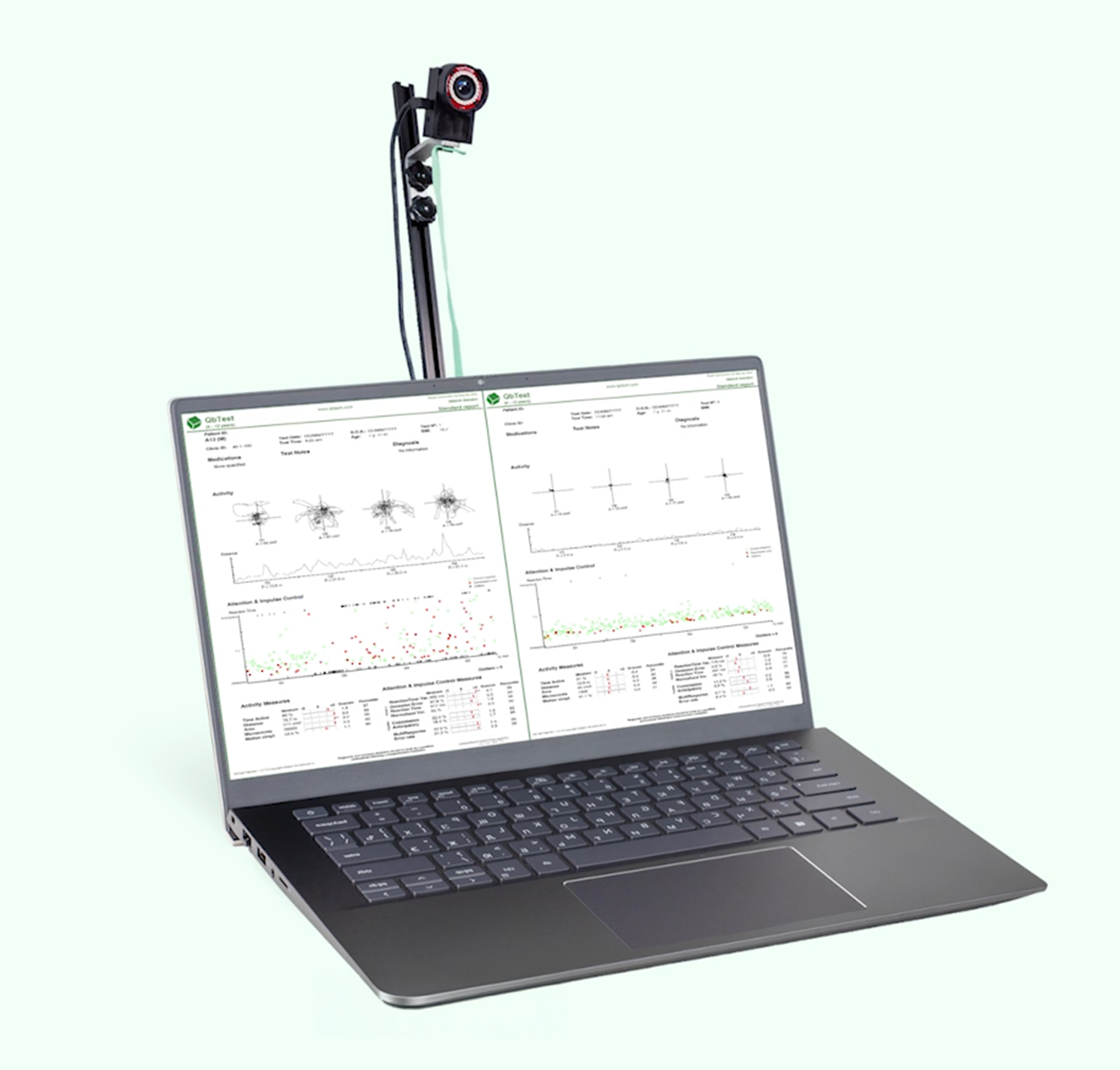
Attention-deficit/hyperactivity disorder (ADHD) affects millions of people worldwide — yet diagnosing it remains a complex, often subjective process. Could artificial intelligence (AI) change that? Imagine a future where computers help clinicians decode subtle brain patterns, EEG signals, movement biomarkers, and visual rhythms to identify ADHD faster and more accurately than ever before.
This isn’t science fiction — it’s happening now.
In this article, we’ll explore:
Why ADHD diagnosis is uniquely challenging
How AI is being applied to solve these challenges
Ground-breaking research on accuracy rates
Limitations, ethical considerations, and future directions
What this means for patients, clinicians, and families
A powerful call-to-action at the end
Let’s unravel the truth behind AI in ADHD diagnostics — what it can do, what it can’t yet do, and where it’s heading.
Why ADHD Diagnosis Is So Hard — And Why AI Matters
ADHD is a neurodevelopmental disorder characterized by inattention, hyperactivity, and impulsivity. Symptoms vary widely — even among people with the same subtype — and overlap with conditions like anxiety, depression, and learning disorders. That makes precise diagnosis tricky. Traditional evaluations rely heavily on:
While these assessments are clinically valid, they’re also time-intensive, subjective, and influenced by clinician experience. There’s no single laboratory test (like a blood test) that objectively diagnoses ADHD — unlike conditions such as diabetes.
This is where AI enters the picture.
AI, particularly machine learning (ML) and deep learning, thrives on pattern recognition — especially in complex, high-dimensional data. ADHD involves neurobiological differences in brain connectivity patterns, attention processing networks, and subtle behavioral signatures. AI can sift through massive amounts of data — EEG recordings, MRI scans, motion data, even behavioral cues — and learn to recognize patterns that might elude human observers.
The AI Revolution in ADHD Diagnostics: What Researchers Are Doing
Leading research shows that AI systems can analyze different types of data — from brain activity to motion patterns — to identify ADHD with high accuracy in controlled settings.
Here’s a snapshot of what the science is finding:
1. EEG-Based Models: High Accuracy in Neural Signal Detection
Electroencephalography (EEG) measures electrical activity in the brain. Researchers train AI models to distinguish ADHD brainwave patterns from typical development.
One deep-learning framework achieved up to ~98.2% accuracy and 93.9% recall in classifying ADHD using EEG data — capturing characteristic neurological responses associated with ADHD behaviors. (PubMed)
Advanced EEG-based models have also achieved accuracy rates as high as 99.1% with extremely high sensitivity and specificity in detecting ADHD signatures. (MDPI)
These results suggest that AI can potentially detect subtle electrical patterns that reflect ADHD-related neural differences — something that’s very hard to quantify with traditional clinical tools.
2. MRI and Neuroimaging with Machine Learning
Functional MRI (fMRI) and structural MRI data hold rich information about brain connectivity and organization.
Hybrid machine learning models trained on MRI and phenotypic data have reached ~92.5–99% accuracy in distinguishing ADHD from non-ADHD in large datasets. (arXiv)
Some approaches incorporate neural network ensembles to optimize classification performance.
However, MRI-based systems face practical challenges: MRI scans are costly, require stillness (which is difficult for many individuals with ADHD), and are not widely used in routine ADHD clinical assessments. (IIETA)
3. Visual Rhythms: A New Frontier
Researchers are exploring novel ways to diagnose ADHD using visual processing patterns.
AI models analyzing “brain rhythms” during visual tasks have achieved clinical diagnostic accuracy of ~91.8% in early studies, offering a low-cost, brief testing alternative. (The Neuro Times)
This suggests there may be behavioral signatures of ADHD detectable outside traditional methods — potentially opening doors to more accessible screening tools.
4. Motion-Tracking and Behavioral Biomarkers
Some AI tools are combining wearable sensors and motion data to detect subtle movement patterns linked to ADHD traits.
A study using motion sensors and deep learning reported around 70–71% diagnostic accuracy for ADHD and autism combined — showing promise for rapid screening tools in primary care or school settings. (Child Neurology)
While this accuracy is lower than EEG or MRI-based systems, it reflects real-world constraints and the potential for quick triage instruments that support clinicians.
5. Hybrid Models and Clinical Decision Support
AI isn’t only about raw accuracy — it’s also about supporting clinical judgment. Hybrid models that combine AI outputs with clinician expertise have achieved ~95% accuracy in some clinical samples. (PubMed)
These systems can help guide structured assessments, reminding clinicians of critical criteria and minimizing human error or oversight.
So — How Accurate Is AI Really?
Let’s unpack the accuracy question — because it’s not a single number.
1. Controlled Research vs Real-World Practice
Most high accuracy figures (90%+) come from research environments using:
Clean datasets
Standardized diagnostic labels
Large numbers of training examples
Controlled conditions
For example:
EEG-based AI systems often exceed 95–98% accuracy in controlled tests. (PubMed)
Neural network models with specialized feature extraction have achieved ~99% accuracy with cross-validated datasets. (MDPI)
Hybrid machine learning models combining clinical features and expert criteria can reach ~93–95% accuracy. (PubMed)
But in the real world, conditions are messier:
• Variable patient behavior
• Diverse comorbid conditions
• Inconsistent data quality
• Limited access to expensive MRI/EEG testing
Thus, real-world performance may be lower — closer to 70–85% depending on the tool and setting.
2. Comparison to Traditional Diagnostics
Traditional clinical diagnostic pathways often involve structured interviews, rating scales, and observation. These methods rely on clinician expertise and can vary in consistency. Some structured tools like the T.O.V.A. (Test of Variables of Attention) have 84–90% identification rates for specific ADHD types — but they are not standalone diagnostics. (Wikipedia)
AI models are increasingly matching or exceeding these rates in research settings — but they are generally not yet proven to replace clinical assessment.
3. Are AI Tools Ready for Clinical Use?
The honest answer: not yet, at scale.
While many AI systems demonstrate impressive accuracy in academic settings, they still face hurdles:
Lack of large-scale clinical validation: Most models haven’t been tested across diverse populations and clinical environments. (PubMed Central)
Data variability: EEG, MRI, motion data, and behavioral signals can vary with age, medication status, and co-occurring conditions.
Ethical and regulatory challenges: AI medical tools must undergo rigorous regulatory review before clinical deployment.
Interpretability: Clinicians want explainable AI — not just predictions but understandable reasons behind them.
In short: AI is promising, but not yet the clinical gold standard.
Why Accuracy Numbers Can Be Misleading
When reading about “98% accuracy,” it’s essential to understand:
1. What type of accuracy?
AI models report various metrics:
Accuracy — overall correctness
Sensitivity — ability to detect true positives (i.e., actual ADHD cases)
Specificity — ability to detect true negatives (non-ADHD)
Recall and precision — related to prediction reliability
A tool might be extremely good at recognizing ADHD when it’s present, but less good at avoiding false positives — especially in overlapping conditions.
2. Dataset Bias
Many datasets are skewed toward specific age groups, ethnicities, or diagnostic subtypes — which can inflate accuracy metrics. (PubMed Central)
3. Controlled vs Noisy Data
Research datasets are often cleaned and curated. Real-world clinical settings have noisy, incomplete, or inconsistent data — which can degrade performance.
So instead of fixating on a single percent figure, it’s more informative to look at how performance translates into clinical impact.
Challenges & Ethical Considerations
AI in ADHD diagnosis isn’t just about performance — it raises important ethical questions:
1. Data Privacy
Brainwave, behavioral, and sensor data are deeply personal. Data security must be robust.
2. Bias and Fairness
AI models trained on limited demographic data can underperform in underrepresented groups. This could widen disparities in ADHD diagnosis.
3. Misuse and Over-Reliance
Bad actors already promote unvalidated “AI ADHD tests” on social media. Regulators in the UK have banned misleading ads claiming AI diagnosis and treatment. (Financial Times)
People may self-diagnose based on online tools with unknown accuracy — risking harm and delayed professional care.
4. The Human Factor
No matter how good AI becomes, human clinical judgment remains vital — especially for interpreting context, differential diagnoses, and co-occurring conditions.
AI should augment clinicians — not replace them.
Where AI Is Heading Next
AI research in ADHD diagnostics is accelerating. Key frontiers include:
Multimodal AI
Integrating EEG, MRI, motion, eye tracking, and cognitive data to capture ADHD signatures from multiple angles.
Explainable AI
Models that explain why they made a prediction — empowering clinicians to trust and interpret outputs.
Real-World Trials
Large-scale clinical studies across diverse populations to validate AI tools beyond research labs.
Accessible Screening Tools
Simple, affordable AI tools that support early screening in schools or primary care — leading to faster referral and assessment.
What This Means for You
If you’re:
A person suspecting ADHD
AI may one day offer faster, convenient initial screening — but professional evaluation remains essential. Don’t rely on online quizzes or unvalidated apps.
A parent or caregiver
AI tools could help reduce waiting times, especially in regions with scarce specialist clinicians — but only as part of a comprehensive clinical process.
A clinician
AI offers decision support — helping standardize assessments, recognize patterns, and flag cases for deeper evaluation.
A researcher
This field is ripe with opportunity — from better datasets to hybrid models combining AI with clinical expertise.
How Accurate Is AI?
AI in ADHD diagnostics shows remarkable promise, with research models achieving accuracy rates often above 90% in controlled settings. However:
✔ Accuracy varies by data type (EEG, MRI, motion, visual rhythms)
✔ Most tools are research-stage, not clinical standards
✔ Validation in diverse real-world settings is limited
✔ Ethical, privacy, and regulatory barriers remain
So while AI is not yet a standalone diagnostic tool, it is rapidly becoming a powerful clinical support system.
Comments
Post a Comment