Imagine this: what if three simple phrases you say every morning could literally reshape your brain? What if repeating a few meaningful words could calm stress, enhance motivation, and even rewire neural pathways for a more positive and resilient mindset?
That’s not just hopeful thinking — it’s science.
In this article, we’ll explore how affirmations work in the brain, what neuroscience research has discovered about their effects, why consistent practice matters, and how to use affirmations in a way that truly transforms your mind and behavior.
Why Scientists Are Paying Attention to Affirmations
Affirmations might sound like self-help fluff — but brain imaging studies reveal something powerful: repeating positive, self-relevant statements doesn’t just feel good… it activates the same reward and self-processing centers your brain uses for genuine pleasure and long-term motivation. (PubMed)
This explains why people who use affirmations consistently often report less stress, greater confidence, improved performance, and more resilience in challenging situations. But what’s really happening under the hood?
Let’s break down the neuroscience.
1. What Affirmations Are — and Why They Aren’t “Just Words”
At their core, affirmations are intentional, positive statements about your values, identity, or future aspirations. Examples include:
“I am confident and capable.”
“I am worthy of success.”
“I grow stronger every day.”
These statements might seem simple — but consistent use can lead to meaningful changes in how your brain processes thought, emotion, and motivation.
Why?
Because your brain is plastic — constantly changing in response to your experiences, thoughts, and behaviors. This ability to adapt and reorganize is called neuroplasticity, and it’s the key to understanding how affirmations influence your brain. (affirmation.studio)
2. Neural Activation: The Brain on Affirmations
So what actually happens in the brain when you use affirmations?
Reward System Engagement
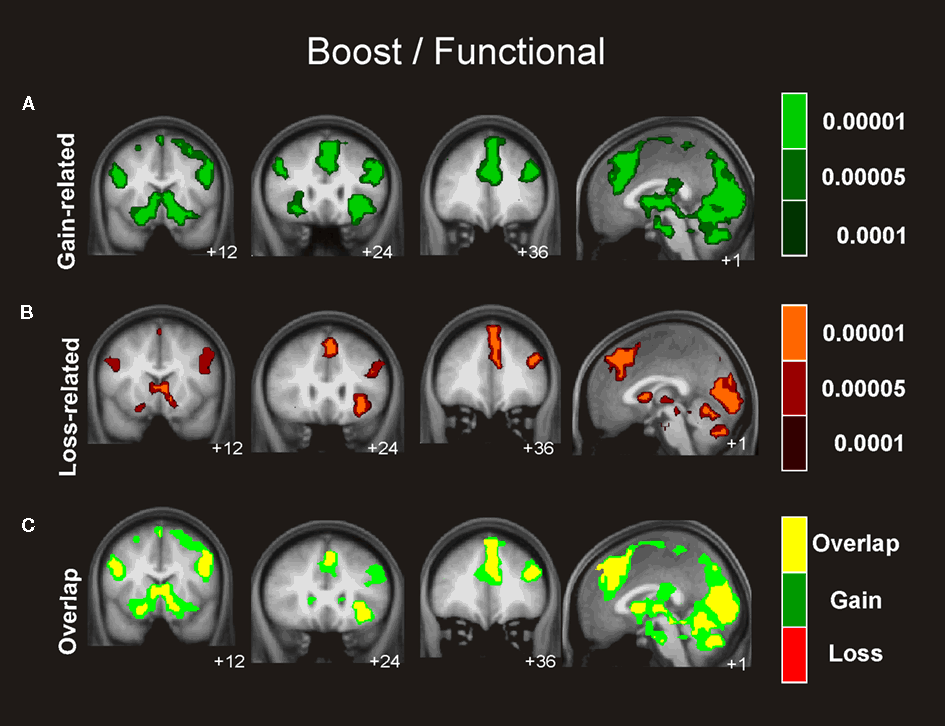
Studies using fMRI (functional magnetic resonance imaging) show that self-affirmation activates the brain’s reward centers, including:
Ventromedial Prefrontal Cortex (VMPFC)
These are the same regions involved when we experience pleasure, motivation, or value-based decision-making. Simply put: affirmations stimulate similar neural patterns as positive, meaningful rewards. (PubMed)
Self-Reference and Emotional Regulation
Affirmations also increase activity in brain regions tied to self-processing — especially the:
Medial Prefrontal Cortex (MPFC)
Posterior Cingulate Cortex (PCC)
These regions help your brain integrate a positive sense of self, which makes affirmations more than feel-good statements — they become part of how your brain interprets your identity and value. (PMC)
Threat Response and Stress Reduction
Affirmations have been linked to decreased stress responses in brain areas like the amygdala — the part responsible for emotional reactions like fear and anxiety. When threat centers calm down, the brain can process information more clearly and stay open to growth. (Business Standard)
3. Neuroplasticity: How Affirmations Forge New Pathways
Neuroplasticity — the brain’s capacity to form and strengthen connections — is central to how affirmations work.
Here’s the idea:
Neurons that fire together wire together. Repeating positive thoughts consistently reinforces neural circuits associated with those thoughts — making them easier to access over time. (Affirmations Guide)
That means:
Negative, self-defeating thoughts lose strength.
Positive, empowering thoughts become default pathways.
Your brain becomes more inclined to think in ways that support confidence and resilience.
Over weeks or months, this rewiring helps your typical thought patterns shift from doubt and fear to belief and action.
4. Affirmations and Behaviour Change: More Than Motivation
It’s one thing to think differently — but affirmations also influence behavior.
Value-Based Motivation
When affirmations align with your core values, the brain processes them as meaningful, not superficial. This actually increases motivation and openness to behavior change. (PMC)
For example:
People who affirmed their personal values were more receptive to health messages and made real changes in physical activity habits. (PMC)
Performance and Stress Buffering
Research links self-affirmations with:
Better academic performance under stress
Reduced physiological stress markers
Greater emotional regulation during challenging tasks (OUP Academic)
In other words, affirmations improve how you respond to pressure — a transformative advantage in real life.
5. How Neurotransmitters May Play a Role
Some studies suggest affirmations influence key neurotransmitters — the brain’s chemical messengers:
Dopamine
Often called the “motivation molecule,” dopamine is linked to pleasure and reward. Affirmations may boost dopamine in reward centers, which supports motivation and reinforces the affirmation habit. (New Health Journal)
Serotonin
Associated with mood and emotional balance, increases in serotonin help promote calm and reduce anxiety.
Cortisol
Lower cortisol — the stress hormone — is tied to relaxation and resilience.
Although direct human studies on neurotransmitters and affirmations are still emerging, the underlying mechanisms make strong theoretical sense in light of what we know about reward circuitry and emotion regulation. (Affirmations Guide)
6. Creating Better Affirmations: Science-Backed Tips
Affirmations aren’t magic on their own — they work best when crafted and used deliberately. Here’s how to get more impact from science-aligned affirmations:
Make Them Personal and Present-Tense
Statements like “I am creative and confident today” work better than generic or future-tense ones.
Root Them in Core Values
Affirm statements tied to what truly matters to you — because your brain assigns more value to statements that reflect your real priorities.
Repeat Consistently
Daily repetition strengthens neural pathways. Try morning and evening sessions to create rhythm and reinforcement.
Pair With Visualization
Imagining the outcome while affirming can enhance the brain’s response — combining emotional engagement with cognitive processing.
Link to Behavior
Connect affirmations with actions that reflect them. For example:
“I am a healthy person” → Go for a walk or choose a nourishing meal today
7. Common Myths and the Real Science
Myth: “Affirmations are just positive thinking”
Reality: They engage neural circuits related to reward, self-processing, and emotion regulation — the same systems used for meaningful learning and habit formation. (PubMed)
Myth: “They work instantly”
Reality: Neuroplastic change takes time. Weekly consistency builds brain-level changes over weeks and months.
Myth: “They only work if you feel them emotionally”
Reality: Even when affirmations feel awkward at first, repetition strengthens the neural patterns that support new thought habits.
8. Real-World Benefits People Report
People who use affirmations regularly often cite improvements in:
Confidence and self-belief
Reduced anxiety in stressful scenarios
Greater clarity and focus on goals
Resilience in setbacks
Motivation to take positive actions
These outcomes are not anecdotes — they align closely with how neuroscience understands reward circuits, self-referential processing, and neural rewiring.
9. Putting It All Together: A Short Daily Routine
Here’s an evidence-based affirmation practice you can start today:
Morning (2–3 minutes)
Pick 2–3 values-aligned affirmations.
Say or write them while breathing deeply.
Visualize yourself living them throughout the day.
Midday (Optional)
Repeat them silently when stress hits — this helps calm threat responses and reorient attention.
Evening (2–3 minutes)
Reflect on how you lived your affirmations today and revise for tomorrow if needed.
Over time, this simple routine trains both your brain and your behavior toward positive outcomes.
Incorporate the Science Into Your Life
Affirmations are powerful because they tap into real brain mechanisms — influencing reward pathways, emotional regulation, and the very connections that shape your thinking patterns.
So if you’re serious about mindset transformation, the science says this: consistency + meaning = change.
Comments
Post a Comment